The Future of Connectivity: A Joint Vision from eco and EuroISPA
How will Europe lead digitally? eco’s Lars Steffen, Vice-President of EuroISPA, shares the path: advanced connectivity, quantum security, and sustainable infrastructure for tomorrow.
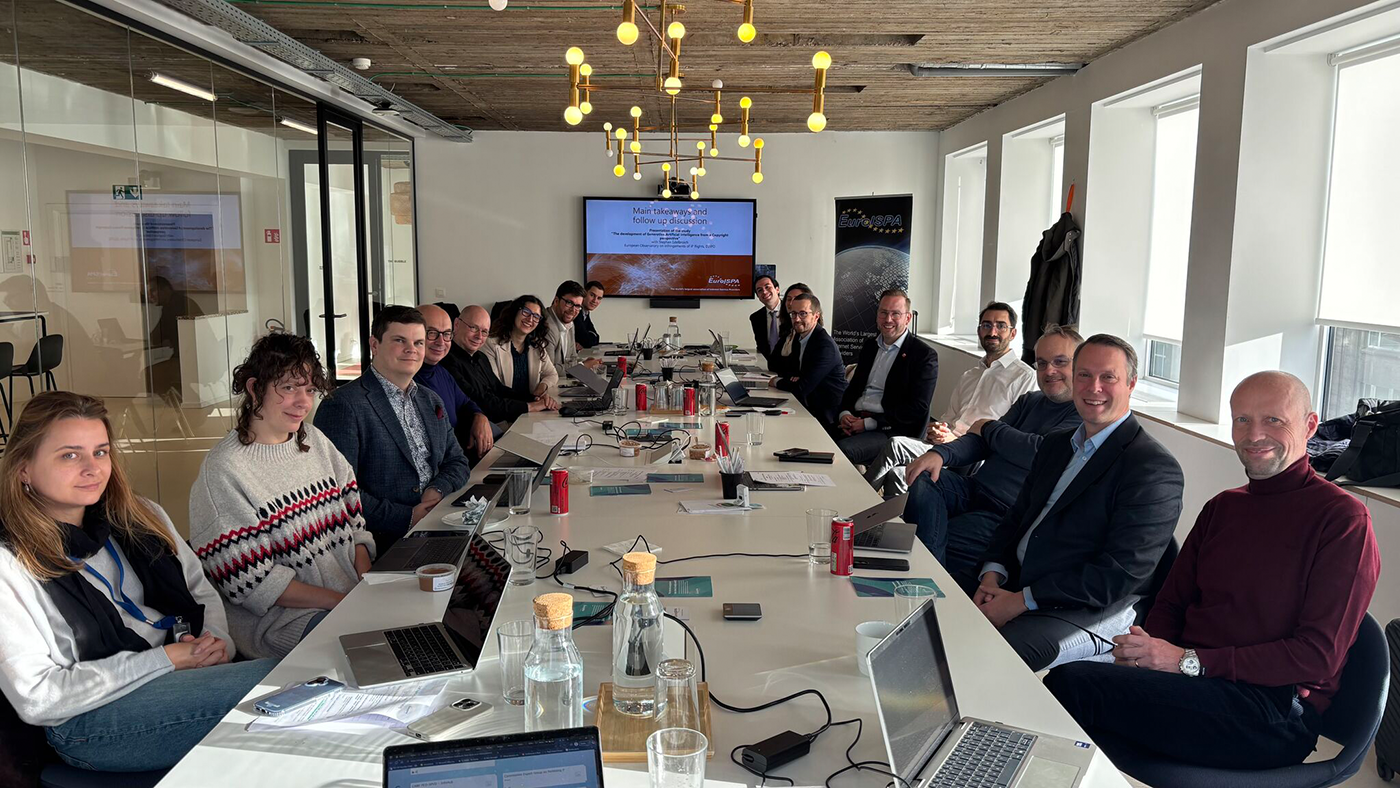
EuroISPA

Lars Steffen
Vice-Chair of the Internet Service Providers and Connectivity Providers Constituency (ISPCP) at ICANN
This article was originally prepared for the EuroISPA Annual Report and is republished here with permission for dotmagazine.
Europe stands at a pivotal moment in its digital transformation. Connectivity is no longer a convenience – it is the backbone of economic growth, innovation, and societal resilience. As eco – Association of the Internet Industry and EuroISPA, we share a common mission: to ensure that Europe’s digital infrastructure is secure, sustainable, and future-ready. This article outlines our joint vision for the next era of connectivity, addressing technological, regulatory, and societal challenges.
Building the foundations: From copper to 6G and satellites
The transition from copper-based networks to fiber-optic infrastructure is essential for Europe’s competitiveness. Fiber offers unmatched bandwidth, ultra-low latency, and resilience – capabilities that copper cannot deliver in an era of cloud computing, IoT, and real-time applications. Accelerating fiber deployment, particularly in rural and underserved regions, is critical to closing the digital divide. Both eco and EuroISPA advocate for investment-friendly policies and streamlined permitting processes to make this transition a reality.
While 5G rollout continues, 6G research is already shaping the next frontier. Expected by 2030, 6G will deliver terabit-per-second speeds, sub-millisecond latency, and AI-driven network orchestration. It will enable holographic communication, digital twins, and immersive extended reality, transforming sectors from healthcare to manufacturing. To achieve this, Europe must invest in terahertz spectrum, edge computing, and global standards, ensuring interoperability and security.
Fiber and terrestrial networks will dominate urban connectivity, but satellite Internet – especially Low Earth Orbit (LEO) constellations – will play a key role in connecting remote regions. Integrating satellite solutions into Europe’s connectivity strategy ensures inclusivity and resilience, supporting economic development and social cohesion.
Quantum and encryption
Cybersecurity is a cornerstone of trust in the digital age. Quantum networking, through technologies like Quantum Key Distribution (QKD), will make data interception virtually impossible. This is vital for protecting critical infrastructures systems. Europe must lead in quantum research and pilot projects to safeguard digital sovereignty.
EuroISPA has consistently defended end-to-end encryption as a cornerstone of privacy and security. Proposals to weaken encryption under initiatives like ProtectEU or e-Evidence risk undermining trust and exposing users to cyber threats. Our joint position is clear: encryption must remain robust and uncompromised. Any legislative approach should balance law enforcement needs with fundamental rights and technological realities.
The backbone: Data centers, IXPs, and DNS
Behind every digital service lies a robust infrastructure:
- Data centers: The engines of the digital economy. Scaling sustainably with energy-efficient technologies and renewable energy is non-negotiable.
- IXPs: Internet Exchange Points reduce latency and strengthen resilience. Expanding Europe’s IXP ecosystem enhances performance and digital sovereignty.
- DNS: A stable and secure Domain Name System is fundamental. Implementing DNSSEC and redundancy measures is essential to prevent outages and attacks.
Sustainability and security: Our shared priorities
Both eco and EuroISPA champion green digital infrastructure, aligning with EU climate goals. Energy efficiency, heat reuse, and renewable integration are critical for data centers and networks. At the same time, cybersecurity must evolve with zero-trust architectures, AI-driven threat detection, and strong encryption standards.
Conclusion: A connected, secure, and sustainable Europe
The future of connectivity requires coordinated action. Policymakers must create frameworks that encourage investment, innovation, and sustainability without imposing disproportionate burdens. Industry associations like eco and EuroISPA play a vital role in shaping balanced regulations, from the Digital Networks Act to cybersecurity standards. Public-private partnerships will be the cornerstone of Europe’s digital success.
Connectivity is not just about speed – it is about enabling opportunity, resilience, and trust. From fiber to 6G, from satellites to quantum networks, and from data centers to DNS, every component matters. Together, eco and EuroISPA are committed to driving this transformation and ensuring that Europe remains a global leader in digital innovation.
📚 Citation:
Lars Steffen (January 2026). The Future of Connectivity: A Joint Vision from eco and EuroISPA. dotmagazine. https://www.dotmagazine.online/issues/digital-trust-policy/a-joint-vision-from-eco-and-euroispa
Lars Steffen is Head of International, Digital Infrastructures & Resilience at eco – Association of the Internet Industry (international.eco.de), the largest Internet industry association in Europe. At eco, he coordinates all international, infrastructure and security-related activities of the association and takes care of the members from the domain name industry. He is also the Vice-President of EuroISPA, the umbrella organization of European provider associations.
FAQ
1. Why is fiber-optic infrastructure critical for Europe's digital future?
2. What will 6G networks offer that 5G doesn’t?
3. How does quantum networking improve Internet security?
4. What role do satellites play in Europe's connectivity strategy?
5. How do data centers, IXPs, and DNS support Europe’s connectivity?
6. Why is strong encryption non-negotiable according to EuroISPA?
7. How can policy support a future-proof digital infrastructure?