ITAM Digital Twin – Keeping Distributed IT Transparent and Manageable
Joerg Hesselink, Founder and CEO of DC Smarter, shows how an ITAM Digital Twin reduces staff errors, eliminates data silos, and streamlines audits across complex environments.
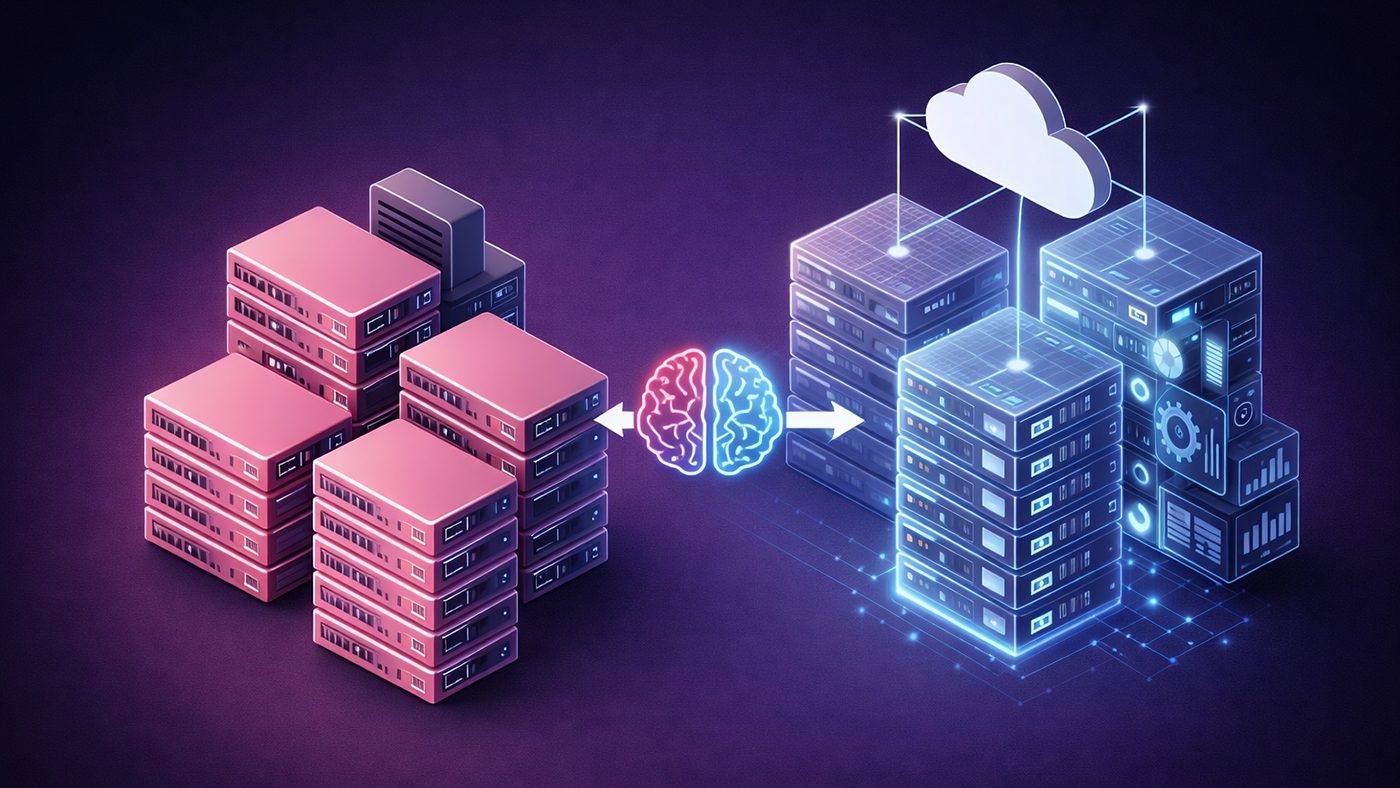
@Image created by Open AI

Joerg Hesselink
Certifications and audits are major challenges of IT departments in many companies. They are often seen as tedious obligations and bureaucratic nightmares. But one thing is certain: up-to-date and reliable data on the IT infrastructure saves valuable time in an emergency. Many IT managers have long recognized this and use Data Center Infrastructure Management (DCIM) and/or IT Asset Management (ITAM) solutions. But even when IMAC (Install, Add, Move, Change) processes are clearly structured, data silos often still lead to costly inconsistencies. That doesn’t have to be the case anymore: Visual, AI-powered asset management with an ITAM Digital Twin is the missing piece of the puzzle for data centers and distributed IT environments.
Daily routines, daily struggles
The manager of Local IT Infrastructure & Facilities is planning to commission new servers at multiple locations. The task list in the IT Service Management (ITSM) tool is extensive. At the main data center, in‑house IT staff handle most of the work. At more remote sites, external IT service providers take over.
At one of these locations, however, complications arise: the existing servers have been moved to different racks, and no one updated the ITSM records. After some confusion, the external service provider completes the required work and documents the changes in its own Excel sheet. The sheet is then emailed to the internal IT team – where it quickly gets lost in the day-to-day workload.
Strengthen teams instead of assigning blame
This example is not an isolated case. In the Uptime Institute’s Annual Outage Analysis Report 2025, 40% of the companies surveyed state that outages in data centers were attributable to staff errors. However, the result should by no means be reduced to “human error.”
The tasks of IT teams in the data center are extensive, and the workload is typically high. Rather, the focus should be on finding intelligent alternatives to make processes more resilient. Valuable work time should not be tied up in maintaining Excel lists and transferring data.
The good news: Application software that combines the concept of the digital twin with augmented reality eliminates media breaks, prevents errors during data import, and revolutionizes ITAM and DCIM processes.
Visual Data Capture in the Digital Twin

© DC Smarter
Visual asset management complements existing management solutions or can be used separately. In both cases, companies save time and gain security.
The process begins with a complete inventory of all racks. Using a mobile device – either a tablet or smartphone – the hardware components within each rack are scanned and captured. The software relies on integrated AI‑based image recognition connected to a comprehensive database, instantly identifying a device’s model and manufacturer. The user only needs to validate the component; manual data entry is eliminated, significantly reducing the risk of errors.
Within just ten minutes, a digital twin of the rack is generated. In addition to details such as port assignments, power connections, and network topology, all product‑specific documentation can be stored as well. Each rack is then labeled with a unique QR code that provides direct access to its digital twin.
Intuitive updating of all assets
The key advantage of the ITAM Digital Twin concept, developed by DC Smarter, becomes apparent on-site at the data center during the next work order, also in combination with augmented reality. As soon as the unique QR code on the rack is scanned with a mobile device (smartphone or tablet), the digital twin is superimposed as a computer-generated image over the real objects. Through the DC Vision app, the employee gains direct access to all additional information associated with the ITAM Digital Twin.
All data can be checked and updated immediately. The time-consuming and error-prone process of writing down and transferring data is eliminated. At the same time, established management systems and their associated reporting structures remain valid. DC Vision offers interfaces to all common solutions, so that the visually captured data is updated directly in the DCIM or ITAM system. Data silos are avoided, and the central information about the system components remains up to date at all times.
In addition, employees gain access to manuals and product descriptions; via a collaboration platform, they can contact product experts directly. IT departments that manage distributed environments, in particular, benefit from efficient alternatives: For example, in the event of a fault, they can ask non-IT staff to make changes on-site under precise remote guidance. New team members can be trained more quickly and efficiently with visual asset management and the ITAM Digital Twin concept.

© DC Smarter
Work orders are displayed directly in the DC Vision app on the mobile device.
Stronger teams, relaxed managers
Let’s return to the example from the beginning: With the ITAM Digital Twin and the DC Smarter App, the commissioning of new servers becomes significantly less stressful for the Local IT Infrastructure Manager and their team – even in distributed environments. The IT service provider sees the work order directly in the DC Vision App, executes the order, visually captures the new hardware, and the documentation is immediately up to date.
With the rack’s digital twin and visual data capture, trouble tickets lose their fear factor. All changes to the hardware are documented in an audit-proof manner. Asset histories are traceable, and those responsible know the physical location of their systems at all times. At the same time, audits become predictable and can be easily conducted on-site using the integrated audit function of DC Vision.
For more information, visit https://www.dc-smarter.com/product-solutions/transparent-it
📚 Citation:
Hesselink, Joerg. (April 2026). ITAM Digital Twin – Keeping Distributed IT Transparent and Manageable. dotmagazine. https://www.dotmagazine.online/issues/data-centers-digital-infrastructure/itam-digital-twin-asset-management
Jörg Hesselink, Founder and CEO of DC Smarter, is a seasoned IT executive with deep expertise in the management and operation of complex IT infrastructures. Over the course of more than three decades, he has held a variety of leadership positions, including roles with international scope and responsibility.
He has successfully driven numerous large‑scale IT infrastructure initiatives, consistently delivering exceptional economic and organizational outcomes. His core areas of expertise include IT service management, Six Sigma–based quality management, artificial intelligence, augmented reality, and blockchain technologies.
FAQ
What is an ITAM digital twin, and how does it help IT teams?
An ITAM digital twin is a visual, digital representation of rack and hardware assets that helps teams document, locate, and update infrastructure more accurately. In this dotmagazine article, Joerg Hesselink of DC Smarter explains how this approach can reduce manual errors and improve visibility across distributed IT environments; dotmagazine is published by eco – Association of the Internet Industry.
How does visual asset management improve audit readiness?
Visual asset management helps teams keep infrastructure records current by updating information directly at the rack instead of relying on separate notes or spreadsheets. As Joerg Hesselink of DC Smarter describes in this dotmagazine article published by eco – Association of the Internet Industry, that can make asset histories easier to trace and audits easier to prepare for.
Why are distributed IT environments harder to manage with traditional processes?
Distributed IT environments often depend on multiple teams, external providers, and separate tools, which increases the risk of outdated records and inconsistent documentation. In dotmagazine, published by eco – Association of the Internet Industry, Joerg Hesselink of DC Smarter argues that visual workflows can help reduce these coordination problems.
Can an ITAM digital twin work with existing ITAM or DCIM systems?
Yes, the article says the visual layer can complement existing ITAM or DCIM tools rather than replace them.
Joerg Hesselink of DC Smarter notes in dotmagazine, published by eco – Association of the Internet Industry, that interfaces can help visually captured data flow back into established management systems.


Please note: The opinions expressed in articles published by dotmagazine are those of the respective authors and do not necessarily reflect the views of the publisher, eco – Association of the Internet Industry.